Ashwagandha is everywhere but what’s all the hype about?
Written by: Apples Editorial Team | 6 min read
Spend a little time browsing the wellness side of social media and there's a good chance you'll encounter ashwagandha. It appears in capsules, gummies, powders and increasingly in conversations about everything from stressful days to better sleep.
Summary
A quick overview of the key takeaways from this Apples article.
An ancient ingredient having a modern moment
Ashwagandha has been used traditionally for centuries, but its recent wellness popularity has introduced it to a whole new audience.
Stress and sleep are driving the hype
Early research suggests ashwagandha may have potential for stress and sleep, although the evidence is still developing.
Natural doesn’t automatically mean risk-free
Ashwagandha isn't suitable for everyone, making informed choices and professional advice particularly important.
For an ingredient with such a distinctly modern wellness following, though, ashwagandha is anything but new. The plant, Withania somnifera, has a long history of use in traditional Ayurvedic and Unani medicine [1]. What's changed is the audience. An ingredient once largely associated with traditional practice has found itself firmly in the mainstream, and naturally, that's brought plenty of big claims along with it.
So, what actually is ashwagandha? Why does everyone suddenly seem to be talking about it? And perhaps most importantly, how much of the hype is supported by research?
First things first, what actually is ashwagandha?
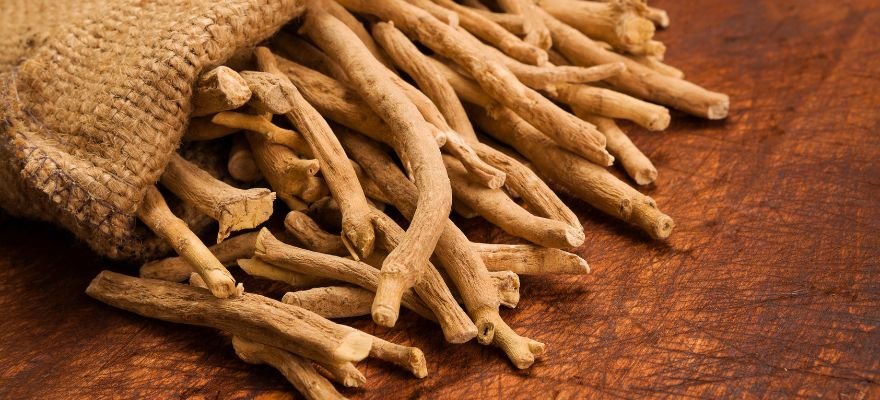
Ashwagandha is an evergreen shrub found in parts of Asia, Africa and Europe. You might also see it referred to as Indian ginseng or winter cherry, although it isn't actually part of the ginseng family [1].
Supplements typically use extracts made from its root or a combination of root and leaves. Ashwagandha is also frequently described as an adaptogen, a term used for certain herbs and substances associated with helping the body respond to stress. It's a word you'll see everywhere in wellness marketing, but it's worth remembering that "adaptogen" isn't a magic switch that suddenly makes stress disappear.
Instead, modern research has been investigating particular ashwagandha preparations to understand whether some of its traditional uses can be supported by clinical evidence.
And that's where things start to get interesting.
Why has ashwagandha suddenly become so popular?
Stress is probably the biggest part of the story.
Modern life provides plenty of reasons to feel switched on all the time. Work notifications follow us home, phones sit beside our beds, and even downtime can somehow turn into another opportunity to scroll. Against that backdrop, an ingredient associated with stress management was perhaps always going to attract attention.
Several relatively small clinical studies have investigated ashwagandha for stress and anxiety. A 2024 systematic review and meta-analysis covering nine randomised controlled trials and 558 participants found improvements in measures of perceived stress and anxiety compared with placebo, as well as reductions in cortisol [2].
More recent research has continued to explore these effects, but that doesn't mean the science is settled. Studies have used different extracts, quantities and durations, and researchers continue to call for better-quality and longer-term evidence [1][2].
In other words, there's something interesting here, but that's different from saying everyone should be taking it.
And what about sleep?
This is another reason ashwagandha frequently appears in evening wellness routines.
Research reviewed by the US National Institutes of Health suggests that ashwagandha extracts may have a small beneficial effect on aspects of sleep, with some studies reporting improvements in sleep quality, total sleep time and the time taken to fall asleep [1]. Interestingly, the effects appear to have been more noticeable in some studies involving people already experiencing sleep difficulties. But there's an important distinction here. Ashwagandha shouldn't be thought of as a sleeping tablet, and a supplement can't compensate for consistently poor sleep habits.
Before adding anything new to your evening routine, look at what happens during the hour before bed. Bright screens, late caffeine, an inconsistent bedtime and taking tomorrow's worries to bed with you can all be worth addressing first.
So does ashwagandha really reduce stress?
There is promising research. A 2024 meta-analysis found beneficial effects on stress and anxiety measures [2], while subsequent research has continued to examine possible effects on stress-related outcomes.
However, not every analysis reaches exactly the same conclusion. One more recent systematic review found a reduction in cortisol but did not find a significant improvement in perceived stress scores [3].
That doesn't mean one study is "right" and another is "wrong". It demonstrates why nutrition and supplement research is rarely as simple as a social media caption makes it sound.
Different formulations, participant groups, study sizes and methodologies can produce different results. That's precisely why it's sensible to describe the evidence around ashwagandha as promising rather than definitive.
Natural doesn't necessarily mean suitable for everyone
This is perhaps the most important part of the conversation. Because ashwagandha is a plant-based ingredient, it can be easy to assume that it's automatically gentle or suitable for anybody. That's not the case. Short-term studies suggest ashwagandha is generally well tolerated by many people, with reported side effects including stomach upset, nausea, loose stools and drowsiness.
However, its long-term safety isn't well established, and there have also been reports linking ashwagandha supplements with liver injury [1][4]. There are additional considerations around thyroid function and possible interactions with medicines including those used for diabetes and blood pressure, sedatives and immunosuppressants [1]. Pregnant or breastfeeding women and some other groups may also be advised against taking it.
Here in the UK, the Food Standards Agency has been reviewing the safety of ashwagandha and notes that there is currently no established safe level for its use in food supplements [4].
Don't assume that a supplement is suitable for you simply because the ingredient is natural. If you take medication, have an existing health condition, are pregnant or breastfeeding, or are unsure about adding ashwagandha to your routine, speak to your GP, pharmacist or another qualified healthcare professional first.
So is ashwagandha worth the hype?
Perhaps the fairest answer is: some of the attention is understandable, but the marketing can run ahead of the evidence.
Ashwagandha has a fascinating traditional history, and modern research into stress and sleep has produced some encouraging findings. At the same time, studies are often relatively small, formulations vary considerably and important questions remain about long-term use and safety.
That's why we're much more interested in understanding an ingredient than declaring it the next wellness miracle.
For someone considering ashwagandha, the starting point shouldn't be "TikTok says I need this." It should be understanding why you're considering it in the first place, looking at the evidence, checking whether it's appropriate for you and remembering that supplements sit alongside, rather than replace, the foundations of good wellbeing.
A final thought to take away..
Wellness trends have a habit of making old ingredients feel brand new. Sometimes there's interesting science behind the excitement; sometimes the story is more complicated than the headline. Ashwagandha is a good example of why a little curiosity goes a long way. Rather than asking whether an ingredient is simply "good" or "bad", perhaps the better question is what do we actually know about it? And that's a question worth asking about every wellness trend that comes our way.

References
The references below link to trusted third-party sources used to support the information in this article. These links will open external websites not operated by Apples.
Covered in this article
Disclaimer: This article is intended for general wellbeing information only and does not replace professional medical advice. Always consult your GP or a qualified healthcare professional before using supplements or alternative products, especially if you have an existing medical condition or are under medical supervision.