Summary
A quick overview of the key takeaways from this Apples article.
An ancient mushroom having a modern moment
Lion's Mane has a long history of traditional use, but its growing popularity has introduced it to a whole new wellness audience.
Brain health is driving the curiosity
Early research into memory, concentration and mood is interesting, although the evidence remains limited and sometimes contradictory.
There's more to know before taking it
Different extracts, product quality and potential side effects are important considerations when exploring Lion's Mane supplements.
First things first, what is Lion's Mane?
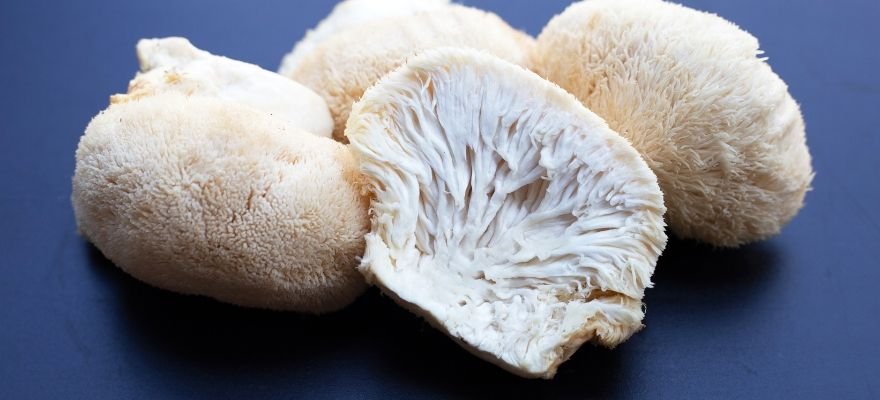
Lion's Mane, scientifically known as Hericium erinaceus, is an edible mushroom with a rather extraordinary appearance. Instead of the familiar cap and stem you might associate with mushrooms, it produces cascading white spines that resemble a lion's mane, which explains its memorable name.
It grows naturally on hardwood trees and has a history of use in East Asian cuisine and traditional medicine. In some countries, it's enjoyed as food, while elsewhere it has become increasingly popular as an ingredient in dietary supplements [1].
But what makes Lion's Mane particularly interesting isn't just its appearance.
Researchers have identified several naturally occurring compounds within the mushroom, including substances known as hericenones and erinacines. These have attracted scientific interest because laboratory and animal studies suggest they may influence biological processes associated with nerve cells [1][2].
That sounds exciting, doesn't it? It certainly is from a research perspective. However, discovering an interesting biological effect in a laboratory is quite different from demonstrating a meaningful health benefit in people. And that's where the Lion's Mane story becomes particularly important.
Why is everyone suddenly talking about Lion's Mane?
The growing interest in Lion's Mane fits into a much bigger wellness trend: people are becoming increasingly curious about how everyday habits, nutrition and supplements might influence how they think and feel. Whether it's struggling to concentrate during a busy working day, feeling mentally exhausted after hours of screen time or simply wanting to stay mentally sharp as we get older, brain health has become a popular subject. Lion's Mane has found itself right in the middle of that conversation.
It's often described as a nootropic, a broad term commonly used for substances promoted for their potential effects on cognitive performance. However, calling something a nootropic doesn't mean its benefits have been scientifically established.
Some of the excitement surrounding Lion's Mane comes from early research into nerve growth factor, or NGF, a protein involved in the growth, maintenance and survival of certain nerve cells [2]. Laboratory research has explored whether compounds found in Lion's Mane might influence processes involving NGF. These findings are scientifically interesting, but they don't establish that taking a Lion's Mane supplement will improve memory, prevent cognitive decline or protect against neurological disease. Those questions require carefully designed human studies. And fortunately, researchers have started investigating them.
Can Lion's Mane really improve memory and concentration?
This is probably the biggest question surrounding Lion's Mane, and the answer is a little more complicated than some supplement advertising might suggest.
A 2023 pilot study involving 41 healthy adults investigated the effects of Lion's Mane on cognitive performance, stress and mood. Researchers observed improvements in performance on one cognitive task following a single dose, alongside a possible reduction in perceived stress after 28 days of supplementation. However, other results showed little or no benefit, and the researchers emphasised the need for larger studies [3].
A separate study published in 2025 examined the immediate effects of Lion's Mane extract in 18 healthy younger adults. Although researchers identified an improvement in one test of manual dexterity, they found no significant overall improvement in cognitive performance or mood compared with a placebo [4].
More recently, a 2026 trial involving 109 adults aged 40 to 75 with self-reported cognitive difficulties reported modest improvements in certain measures of visual attention, alongside improvements in some self-reported wellbeing outcomes. While encouraging, these findings relate to a particular preparation, population and study period and require independent confirmation [5].
Taken together, these studies suggest there may be something worth investigating. But they also demonstrate why it's too early to describe Lion's Mane as a proven memory or concentration supplement. Different studies use different preparations, doses, participants and testing methods, making direct comparisons difficult. The Alzheimer's Drug Discovery Foundation has similarly highlighted the mixed results and relatively small, short-term nature of much of the clinical research [2].
The research is promising enough to continue studying, but not strong enough to make sweeping promises.

What about stress and mood?
Memory and concentration aren't the only reasons people are becoming interested in Lion's Mane. Some research has explored whether the mushroom might influence stress, mood and psychological wellbeing. The 2023 pilot study mentioned earlier observed a trend towards reduced subjective stress following 28 days of supplementation, although the finding fell just outside the conventional threshold for statistical significance [3].
Other studies have produced mixed results. For example, the 2025 trial in healthy younger adults found no significant overall improvement in mood after a single dose [4].
This doesn't necessarily mean Lion's Mane has no effect on mood. It means the available evidence is insufficient to draw reliable conclusions about whether supplementation produces meaningful benefits. It's also important to distinguish between everyday feelings of stress and diagnosed mental health conditions. Lion's Mane should not be presented as a treatment for anxiety, depression or other mental health conditions, and supplements shouldn't replace appropriate professional support.
For now, the most sensible conclusion is that researchers are interested in the relationship between Lion's Mane and psychological wellbeing, but there are still significant gaps in our understanding.
Could Lion's Mane support long-term brain health?
This is perhaps the most fascinating area of research, but also one where we need to be particularly careful.
Some laboratory and animal studies have explored the potential effects of Lion's Mane compounds on nerve cells, inflammation and biological processes associated with neurological health [1][2]. There have also been small human studies involving people with cognitive difficulties.
However, the existing evidence does not establish that Lion's Mane can prevent dementia, reverse memory loss or treat Alzheimer's disease. The Alzheimer's Drug Discovery Foundation's 2025 assessment describes the cognitive findings as mixed and highlights the need for larger, longer clinical trials [2]. That distinction matters enormously.
It's perfectly reasonable to be curious about emerging research. But people experiencing memory problems deserve proper medical assessment rather than promises about a supplement whose clinical benefits remain uncertain.
Are all Lion's Mane supplements the same?
Not necessarily, and this is an area where things can become confusing for shoppers.
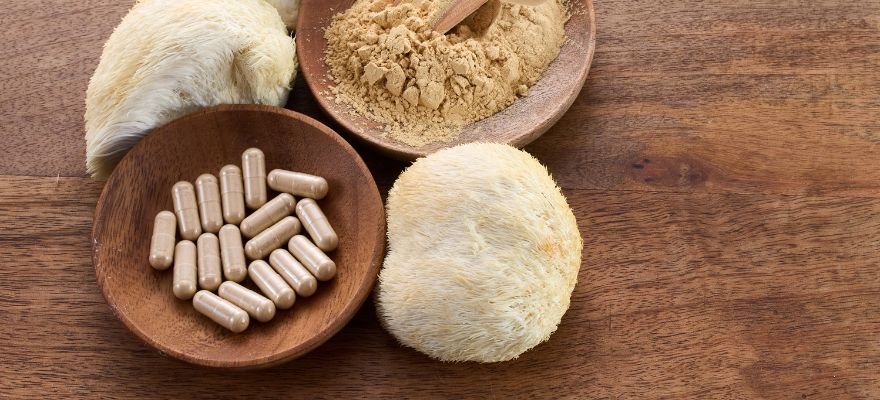
Lion's Mane products are available in several forms, including capsules, powders, liquid extracts and blends containing other mushroom ingredients. You may also notice manufacturers referring to different parts of the mushroom. The fruiting body is the visible mushroom itself, while mycelium is the network of thread-like structures from which mushrooms grow.
Both have been investigated in scientific research, although they may contain different concentrations of naturally occurring compounds depending on how they're grown and processed [1].
Some products also advertise extraction ratios, such as 10:1, or highlight particular compounds. These details can help describe how a product was manufactured, but they shouldn't automatically be interpreted as proof that one supplement is more effective than another. There is currently no universally established optimal Lion's Mane supplement dose for improving cognition or mood.
Is Lion's Mane safe to take?
Because Lion's Mane is an edible mushroom, it's easy to assume that supplements containing it must automatically be safe. But there's an important difference between eating a mushroom as part of a meal and taking a concentrated preparation regularly.
Memorial Sloan Kettering Cancer Center notes that Lion's Mane has generally been used safely as food, but reported side effects associated with its use include abdominal discomfort, nausea and skin rashes [1]. The longer-term safety of Lion's Mane supplements is also not well established [2].
People with mushroom allergies should be particularly cautious, and anyone taking medication, managing an existing health condition, or considering supplementation during pregnancy or breastfeeding should seek professional advice before use. It's also worth remembering that supplements aren't substitutes for prescribed medicines or professional healthcare. Natural ingredients can be interesting, useful and worthy of investigation without automatically being suitable for everybody.
So, is Lion's Mane actually worth the hype?
Perhaps the most interesting thing about Lion's Mane is that the excitement surrounding it isn't entirely without scientific foundation. Researchers have identified compounds worthy of investigation, laboratory findings have raised interesting questions about nerve-cell biology, and a growing number of human studies are beginning to explore potential effects on cognition and wellbeing.
But we're not yet at the point where those findings justify the more dramatic claims circulating online. There's no convincing evidence that Lion's Mane will transform your concentration overnight, make you significantly more intelligent or prevent age-related cognitive decline.
For somebody interested in emerging nutrition research, Lion's Mane is certainly a fascinating ingredient to learn about. For somebody looking for a guaranteed brain boost, however, the evidence simply isn't there yet. And that's an important difference.
What else can we do to look after our brains?
It's easy to become fascinated by an unusual ingredient while overlooking the everyday habits that already play an important role in our wellbeing.
Regular physical activity, adequate sleep, a balanced diet, social connection and managing cardiovascular risk factors are all important considerations for maintaining health as we age. None is particularly glamorous, and they rarely come packaged with an exciting name. But they deserve at least as much attention as the latest supplement trend.
If Lion's Mane has sparked your curiosity about brain health, perhaps that's one of the most useful things it can do: encourage you to think more broadly about the habits that support your wellbeing.
References
The references below link to trusted third-party sources used to support the information in this article. These links will open external websites not operated by Apples.
- [1] Memorial Sloan Kettering Cancer Center - Lion's Mane mushroom
- [2] Alzheimer's Drug Discovery Foundation - Lion's Mane
- [3] Docherty, Doughty and Smith (2023) - The acute and chronic effects of Lion's Mane mushroom supplementation on cognitive function, stress and mood in young adults
- [4] Surendran et al. (2025) - Acute effects of a standardised extract of Hericium erinaceus on cognition and mood in healthy younger adults
- [5] Grant et al. (2026) - A randomized, double-blind, placebo-controlled study evaluating the impact of Hericium erinaceus on cognitive performance and wellbeing


Covered in this article
Disclaimer: This article is intended for general wellbeing information only and does not replace professional medical advice. Always consult your GP or a qualified healthcare professional before using supplements or alternative products, especially if you have an existing medical condition or are under medical supervision.